TUI
Bringing Hotel Details and Offer Configuration to Native
The hotel details and offer configuration are critical moments in the booking journey. This work focused on improving that experience in TUI’s App for the Northern Region market, replacing web views with a native solution that supports faster, more confident booking decisions.
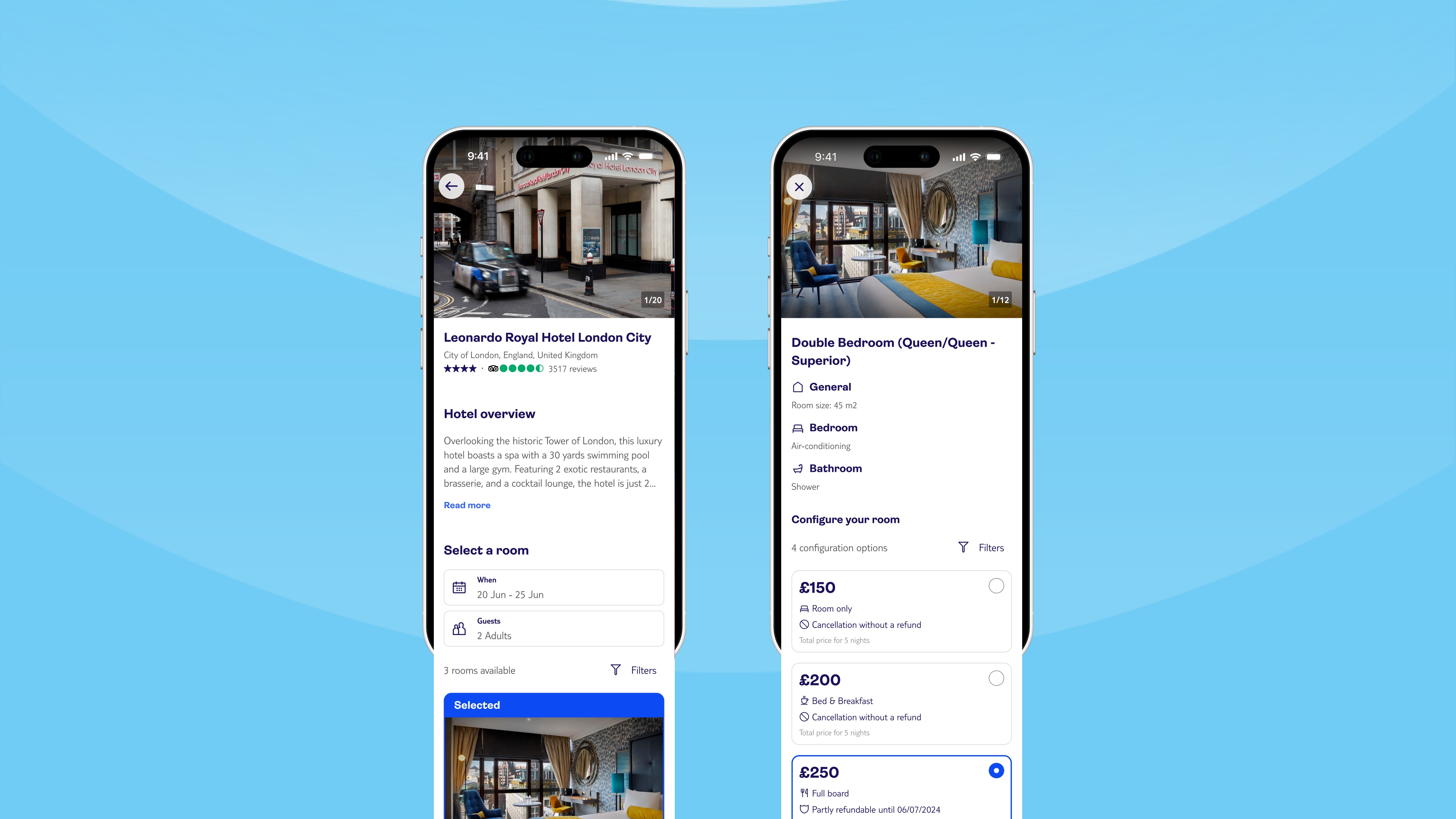
Impact
Within the first month after release, the native experience delivered a 1.27% uplift in overall conversion and a 21% improvement in step conversion compared to the previous web-based solution.
The solution also established a scalable pattern that can be reused across other products in the app and extended to support future enhancements such as multi-room bookings.
Role
Owned the end-to-end design of the Hotel Details and Offer Configuration experience for the App.
Year
2024
Context
For the Northern Region market, hotel details and offer configuration were handled through web views inside the app. This created a fragmented experience, with users moving between native and web screens during a critical part of the booking journey.
The opportunity was to bring this experience fully into native, consolidating hotel information and configuration into a single, focused flow that reduced friction and supported confident booking decisions.
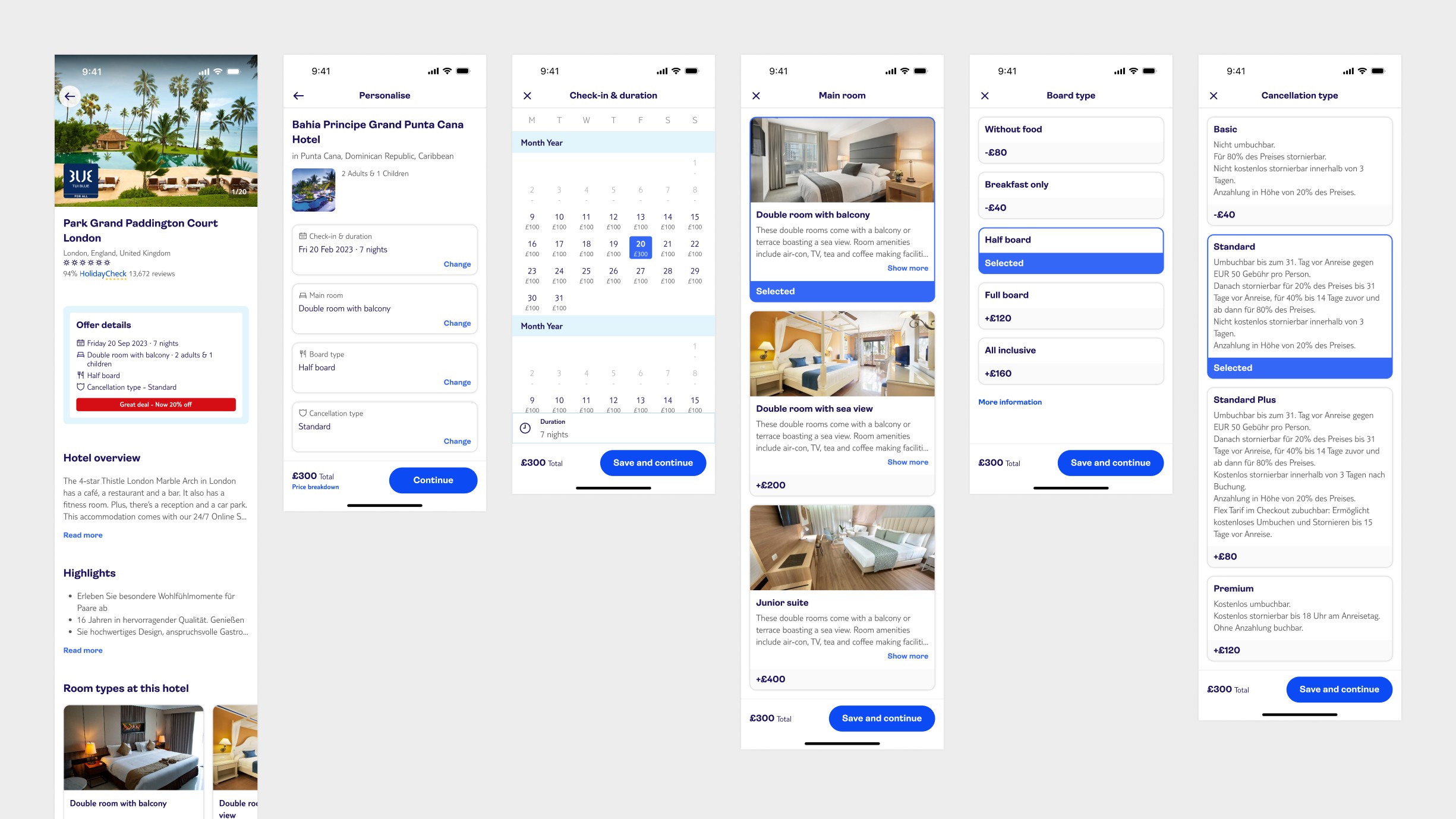
Hotel experience for the Central Region in App
Constraints
The solution needed to meet Northern Region market requirements while working consistently across iOS and Android. It also had to align with Web APIs and data structures, ensuring feasibility without introducing unnecessary complexity.
At the same time, the booking flow needed to remain short and focused, surfacing all essential information without fragmenting the experience. The design also had to be scalable, allowing the approach to be reused across other products and extended in the future.
Understanding the problem
Hotel Details and Offer Configuration were handled inconsistently across products and markets. While the Web experience already combined information and configuration in a single page, several App experiences spread configuration across multiple screens, including in the Northern Region. This increased friction and made it harder for users to stay in context while comparing options.
I aligned early with the Web team to understand API capabilities and market requirements, reviewed existing App flows, and ran competitor research to identify where complexity and friction were being introduced.
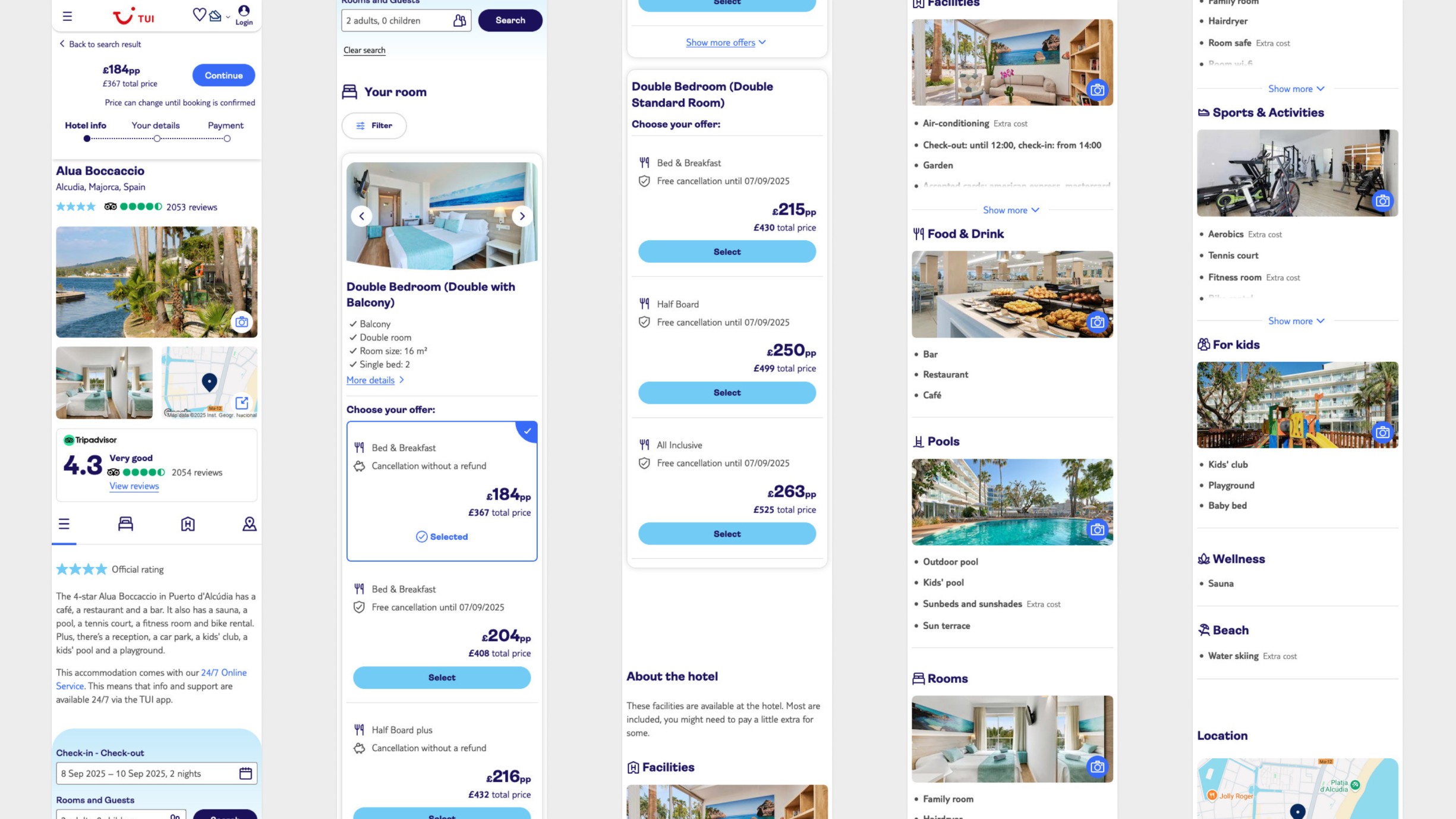
Hotel experience for the Northern Region in Web
Framing the opportunity
The opportunity was to simplify a complex decision without oversimplifying the product. Users needed to understand hotel details and configure their offer quickly, without losing context or confidence during the booking journey.
The challenge was to reduce steps and navigation while still surfacing all essential information at the right moment. This meant designing an experience that kept users oriented, supported comparison and decision-making, and felt natural within a native app environment.
Exploring solutions
Exploration focused on how hotel details and offer configuration could coexist without overwhelming the page. Most concepts tested different ways of surfacing configuration options, as decisions around dates, guests, room types, board, and cancellation directly shaped the structure of the room section.
Concepts varied in how much information was shown upfront versus progressively revealed. Several directions were intentionally dropped where configuration logic began to dominate the interface or introduce unnecessary complexity.
Through this process, the work converged on a direction that balanced flexibility in configuration with a stable, readable room layout.
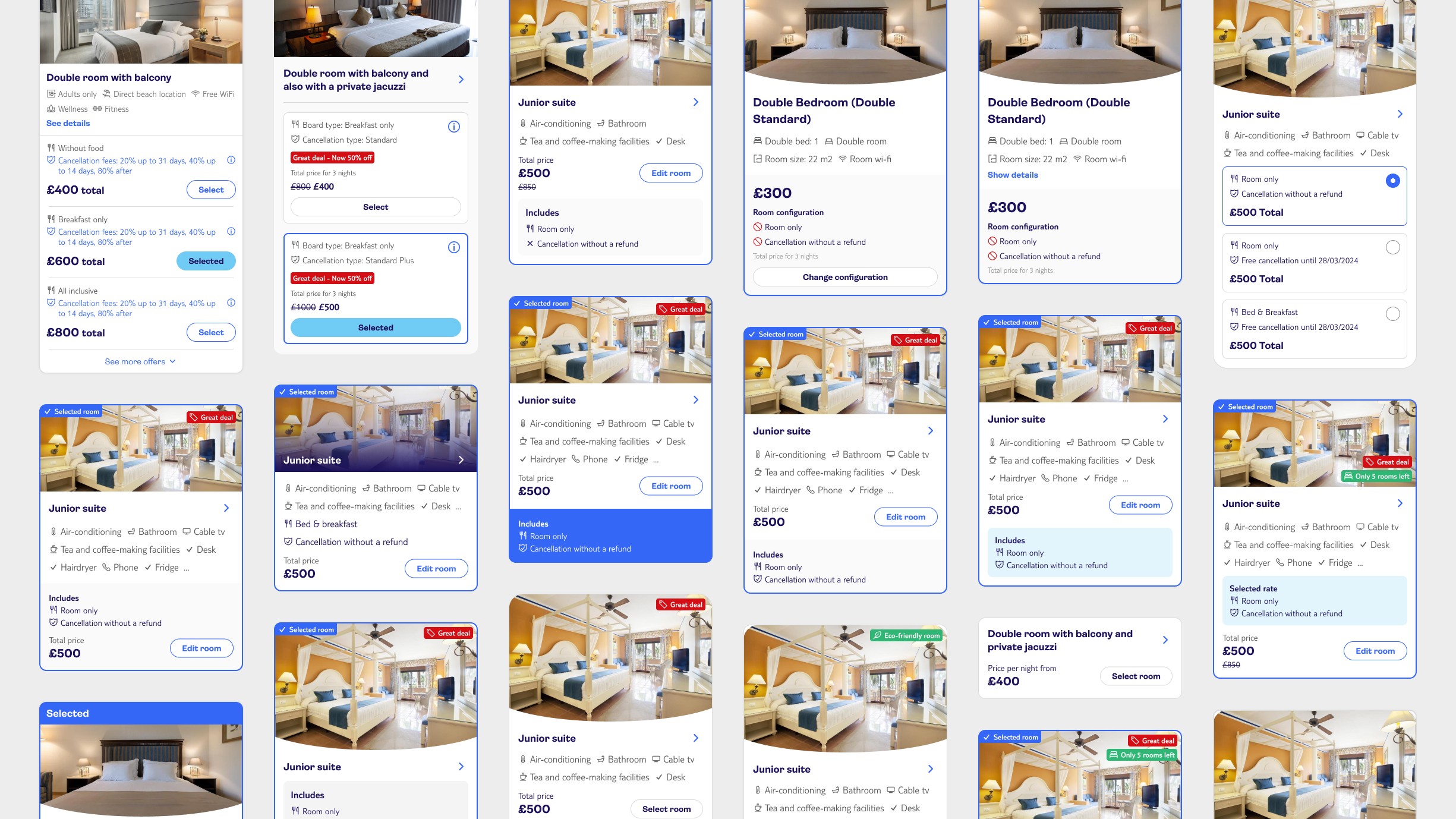
Explorations on offer configuration structure and interface
Validating the approach
The direction was validated through multiple rounds of usability testing, with each iteration incorporating feedback from users and senior stakeholders.
Testing showed that while consolidating everything into a single page seemed appealing, exposing too much configuration at once increased cognitive load. The strongest balance was achieved by anchoring configuration within the room details context, where users naturally focused before progressing.
An A/B test comparing a multi-step flow with an in-context approach confirmed this direction. The in-context solution performed better, reinforcing the decision to reduce steps while maintaining clarity.
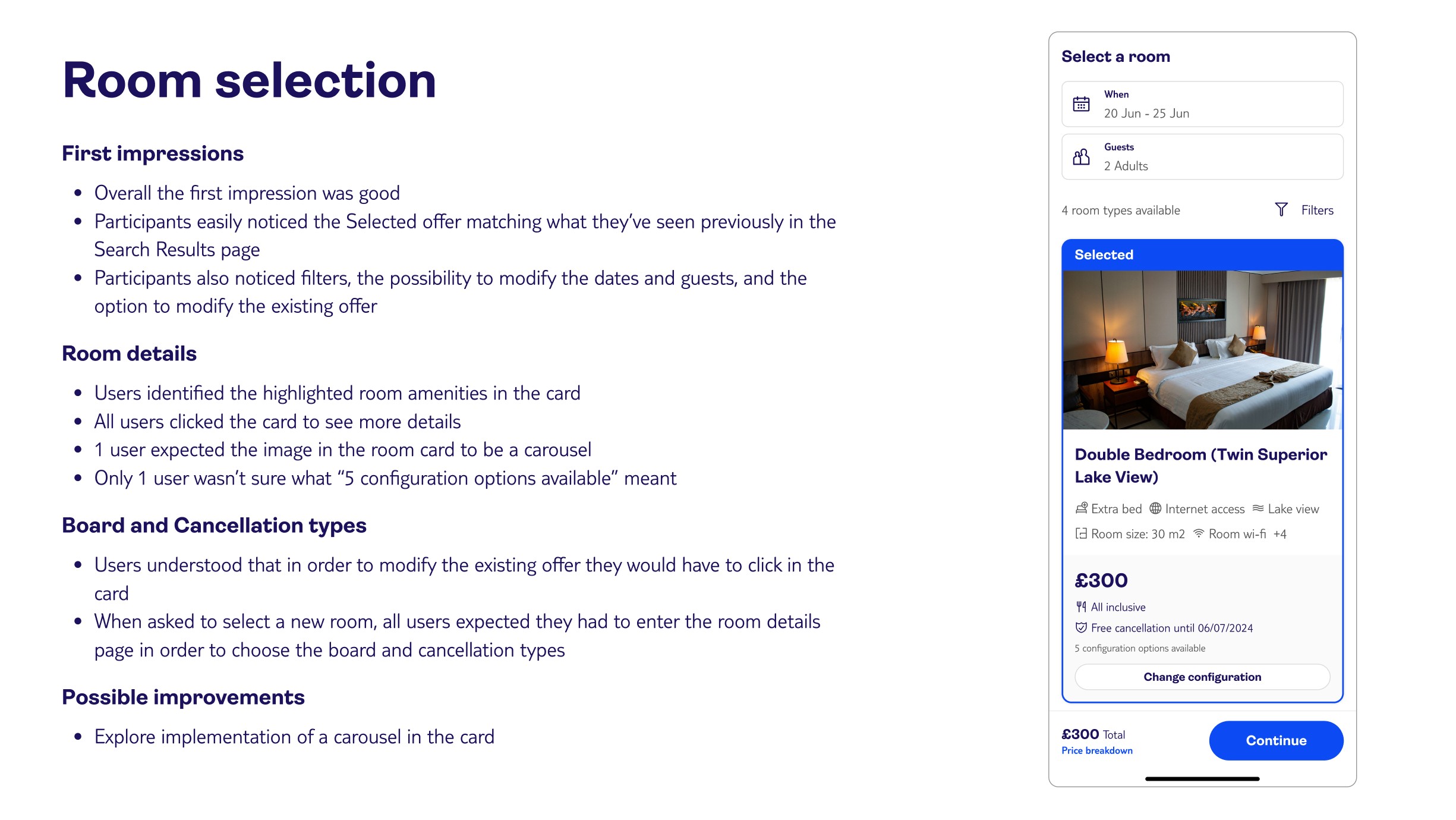
Snapshot of an usability test result
Delivering the solution
The final experience was delivered as a fully native solution for iOS and Android, replacing the existing web views in the App for the Northern Region market. The design accounted for both mobile and tablet form factors, ensuring the experience scaled appropriately across devices.
Throughout delivery, I worked closely with engineering to refine interactions, validate edge cases, and ensure the implementation aligned with the intended experience, particularly under real data conditions.
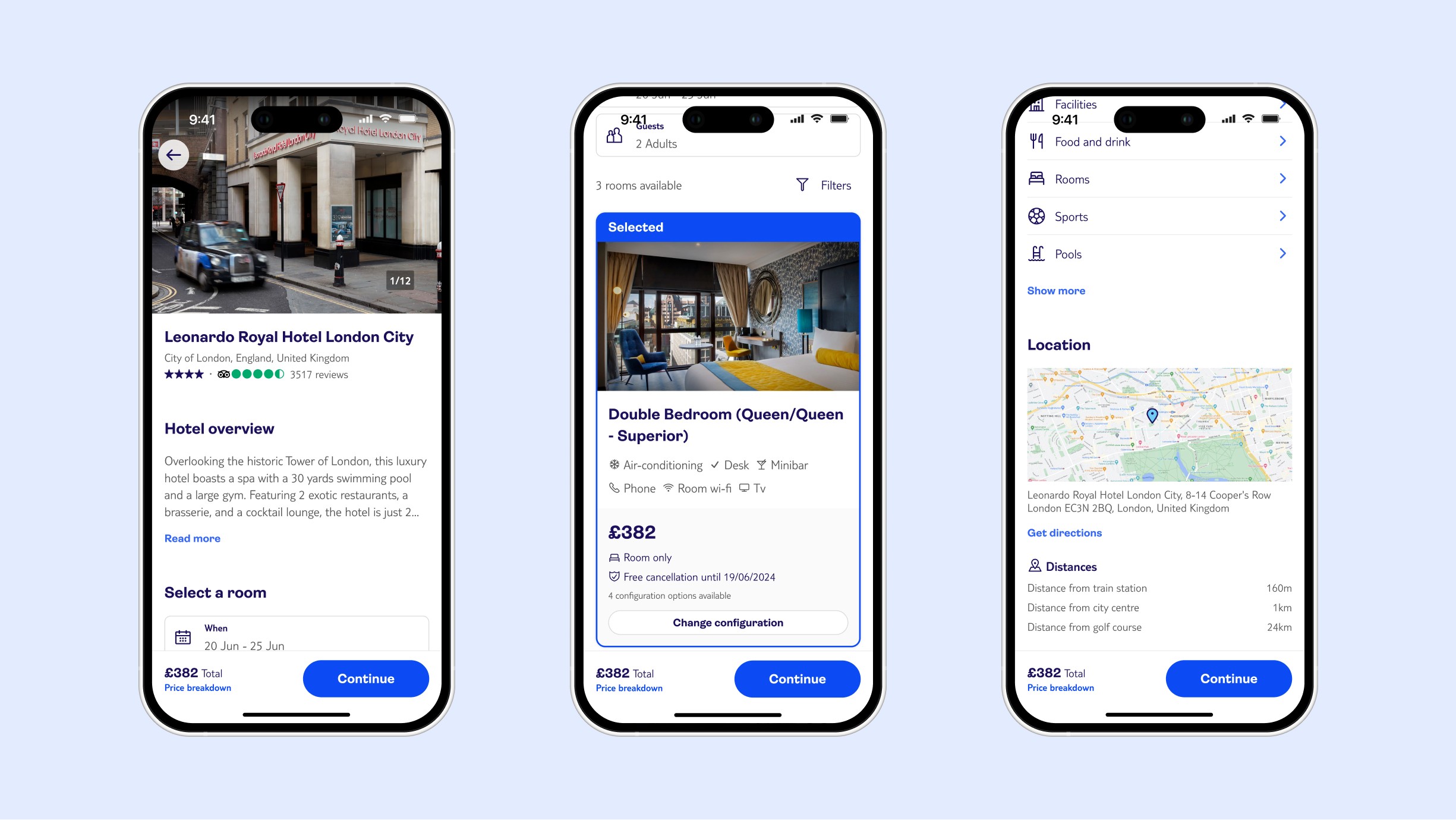
Hotel details page
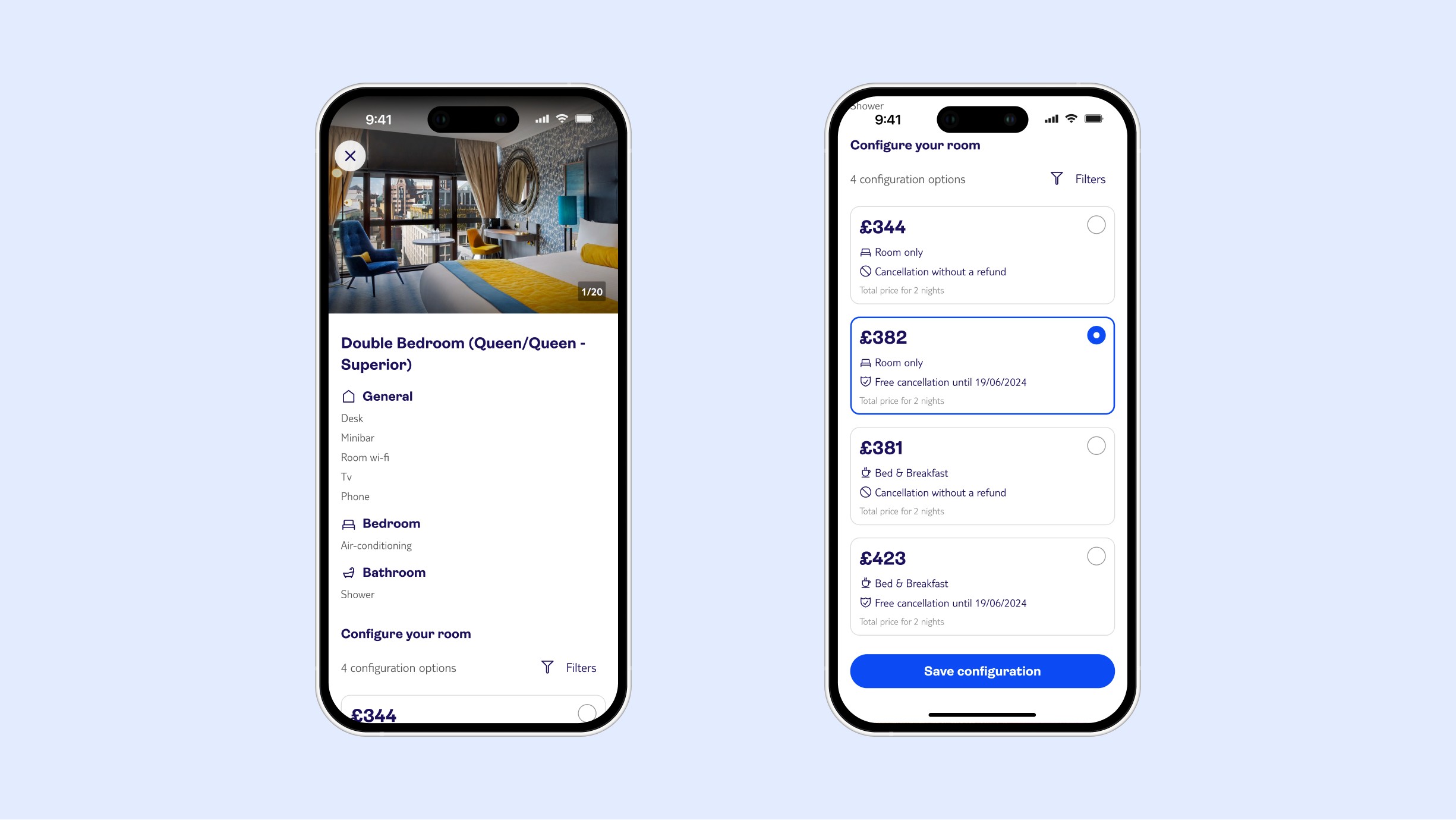
Room details and offer configuration
Outcomes
Results 1 month after release
+1.27%
uplift in overall conversion
21%
improvement in step conversion
The native Hotel Details and Offer Configuration experience was successfully delivered for the Northern Region market and showed positive results shortly after release.
Within the first month, the native experience achieved a 1.27% increase in overall conversion compared to the previous web-based implementation. Step conversion also improved by 21% versus web, validating the decision to reduce navigation and keep configuration within a single, cohesive flow.
Beyond performance improvements, the solution established a scalable foundation that can be reused and adapted across other products in the App, while supporting future enhancements such as multi-room bookings.